
New Murabba, Riyadh (NMDC Development)
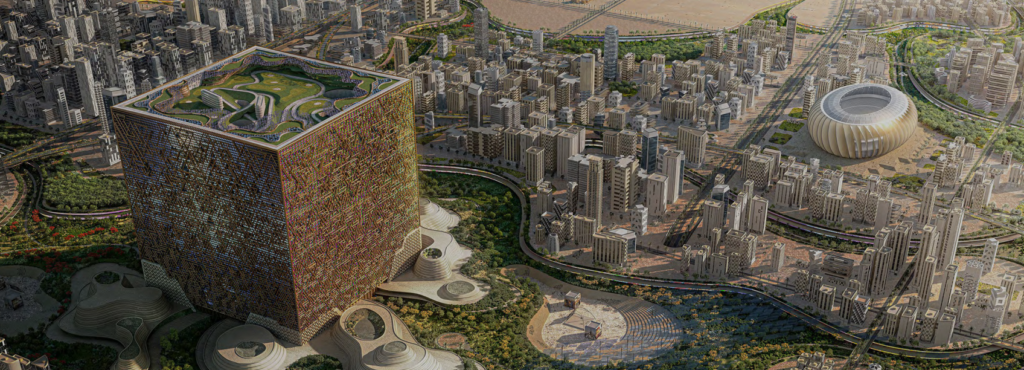
As part of AtkinsRéalis, I contributed to the public realm framework of New Murabba — a transformative mixed‑use urban development positioned as Riyadh’s new downtown. Anchored by the iconic Mukaab, the masterplan integrates cultural identity, climate‑responsive landscapes, and innovative urban design to create a sustainable, future‑ready city centre.
🌱 Vision & Scope
Establish a walkable, shaded urban core that reduces reliance on vehicles.
Embed green infrastructure to mitigate heat, improve air quality, and enhance biodiversity.
Create inclusive public spaces that balance modern vibrancy with Saudi heritage.
Support Riyadh’s ambition to become a global hub for culture, commerce, and innovation.
🏗️ Key Contributions
Wahaa Linear Parks – Designed shaded corridors with 32,000+ trees, improving microclimate, biodiversity, and carbon sequestration.
Makan Open Spaces – Developed plazas and flexible gathering areas for cultural events, recreation, and community interaction.
Darb Mobility Loop – Integrated shaded pedestrian and cycling networks, enhancing connectivity and reducing car dependency.
Podium Landscapes (Mukaab Districts) – Crafted distinct identities for entertainment, wellness, fashion, and family zones, integrating hardscape detailing, seating, shading structures, and sustainable materials.
Climate‑Responsive Planting Strategy – Applied native Ghaf, Sidr, and Date Palm alongside adaptive species like Bougainvillea and ornamental grasses to ensure resilience and reduced irrigation demand.
Urban Identity – Balanced contemporary design with cultural symbolism, ensuring the public realm reflects Riyadh’s heritage while meeting future sustainability goals.
🌍 Impact
The New Murabba public realm is envisioned as a benchmark for sustainable urbanism in the Middle East. By combining shaded walkable streets, vibrant plazas, and ecologically resilient landscapes, the project demonstrates how large‑scale development can integrate climate‑responsive design, cultural identity, and community well‑being into a cohesive urban framework.